
Does PR Help SEO? Here's How Modern PR Improves Search Rankings
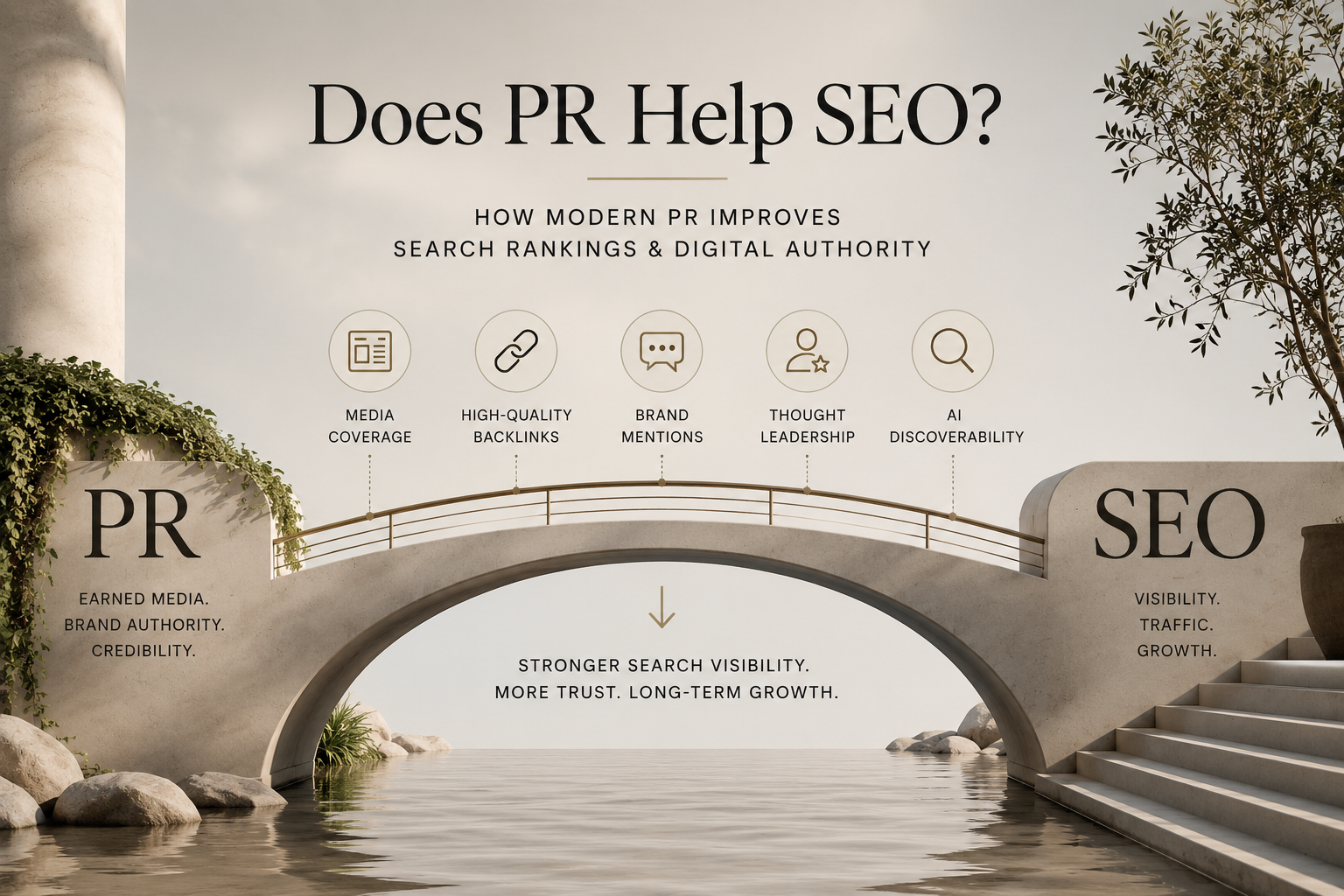
Modern PR and SEO concept featuring a laptop and workspace illustrating how public relations supports search rankings through backlinks, brand mentions, thought leadership, and AI discoverability.
If you're wondering whether public relations helps SEO, the short answer is yes—but probably not in the way most people think.
PR doesn't directly improve your Google rankings. A media placement alone won't suddenly move your website to page one overnight.
What PR does do is build many of the authority signals that search engines—and increasingly AI-powered search tools like ChatGPT, Gemini, and Perplexity—use to evaluate credibility, trust, and expertise.
Today, PR and SEO are no longer separate marketing strategies. Modern brands are increasingly investing in SEO-driven PR to strengthen both media visibility and long-term search performance.
How PR Supports SEO
Traditional SEO focuses on technical optimization, keyword research, and creating valuable website content.
Public relations strengthens the authority behind that content.
When your company earns coverage in trusted publications, several things happen simultaneously:
Your brand reaches new audiences.
Other websites begin mentioning your business.
You often earn editorial backlinks.
Search engines gain more trust in your brand.
AI search platforms encounter your company across multiple authoritative sources.
This is why media relations has become an increasingly important part of a modern SEO strategy.
PR Builds High-Authority Backlinks
One of the biggest ways PR contributes to SEO is by earning high-authority backlinks.
A backlink is simply another website linking to yours.
Not all backlinks are created equal.
A backlink from Forbes, Fortune, Business Insider, Vogue, or TechCrunch carries significantly more authority than dozens of low-quality directory links.
Unlike traditional link-building tactics, editorial backlinks are earned because journalists found your expertise, research, product, or story valuable enough to reference.
This is one of the reasons PR builds backlinks that continue delivering value long after a story is published.
Brand Mentions Matter Too
Not every media placement includes a backlink.
That doesn't mean it has no SEO value.
Google has become increasingly sophisticated at understanding brands, people, and organizations as entities rather than simply counting hyperlinks.
Repeated mentions across trusted publications reinforce that your company is an established voice within its industry.
This growing importance of brand mentions extends beyond Google and into AI-powered search experiences.
PR Supports AI Discoverability
Search behavior is changing.
Instead of typing keywords into Google, more people are asking AI platforms questions like:
Who are the best PR agencies?
What AI startups should I know?
Who is the top cosmetic dentist in Arizona?
AI tools rely heavily on trusted online sources when generating recommendations.
Brands that consistently appear across respected publications are more likely to become part of those answers.
That's why AI discoverability has become one of the newest benefits of strategic public relations.
PR and Thought Leadership Go Hand in Hand
One of the fastest ways to earn meaningful media coverage is through thought leadership.
Journalists are constantly looking for knowledgeable experts who can explain trends, provide commentary, and help readers understand what's happening within an industry.
The more consistently founders and executives contribute valuable insights, the more opportunities they create for ongoing media coverage, brand mentions, and backlinks.
PR Creates Long-Term SEO Value
Unlike advertising, earned media continues working long after publication.
A single article can continue generating:
Organic traffic
Referral traffic
Brand searches
Additional backlinks
Media inquiries
Customer trust
Many of our clients continue benefiting from media placements months—and even years—after they first appear online.
That's why PR should be viewed as a long-term investment rather than a short-term campaign.
PR Works Best Alongside SEO
The most successful companies don't choose between PR and SEO.
They combine:
Technical SEO
High-quality website content
Thought leadership
Earned media
Editorial backlinks
Digital authority
Each strategy strengthens the other.
SEO helps people find your website.
PR helps convince search engines—and prospective customers—that your business deserves to be found.
If you're new to public relations, our PR Guide explains how modern PR helps brands build authority, increase visibility, and support long-term business growth.
Frequently Asked Questions
Does PR directly improve Google rankings?
Not directly. PR strengthens many of the authority signals that influence search performance, including backlinks, brand mentions, expert credibility, and topical authority.
Can PR increase organic traffic?
Yes. Earned media can generate referral traffic, branded search traffic, and improve long-term organic visibility.
Are editorial backlinks good for SEO?
Absolutely. Editorial backlinks earned through trusted media publications are among the highest-quality links a website can receive.
Does PR help AI search?
Yes. As AI search platforms increasingly rely on trusted online sources, brands with consistent media coverage and authoritative mentions are more likely to appear in AI-generated recommendations.
The Bottom Line
Modern PR isn't just about getting featured in the media.
It's about building long-term authority.
Every meaningful media placement has the potential to strengthen your reputation, earn high-quality backlinks, increase brand recognition, improve search visibility, and contribute to AI discoverability.
The brands that treat PR and SEO as complementary—not competing—strategies are the ones building the strongest digital presence for the future.