
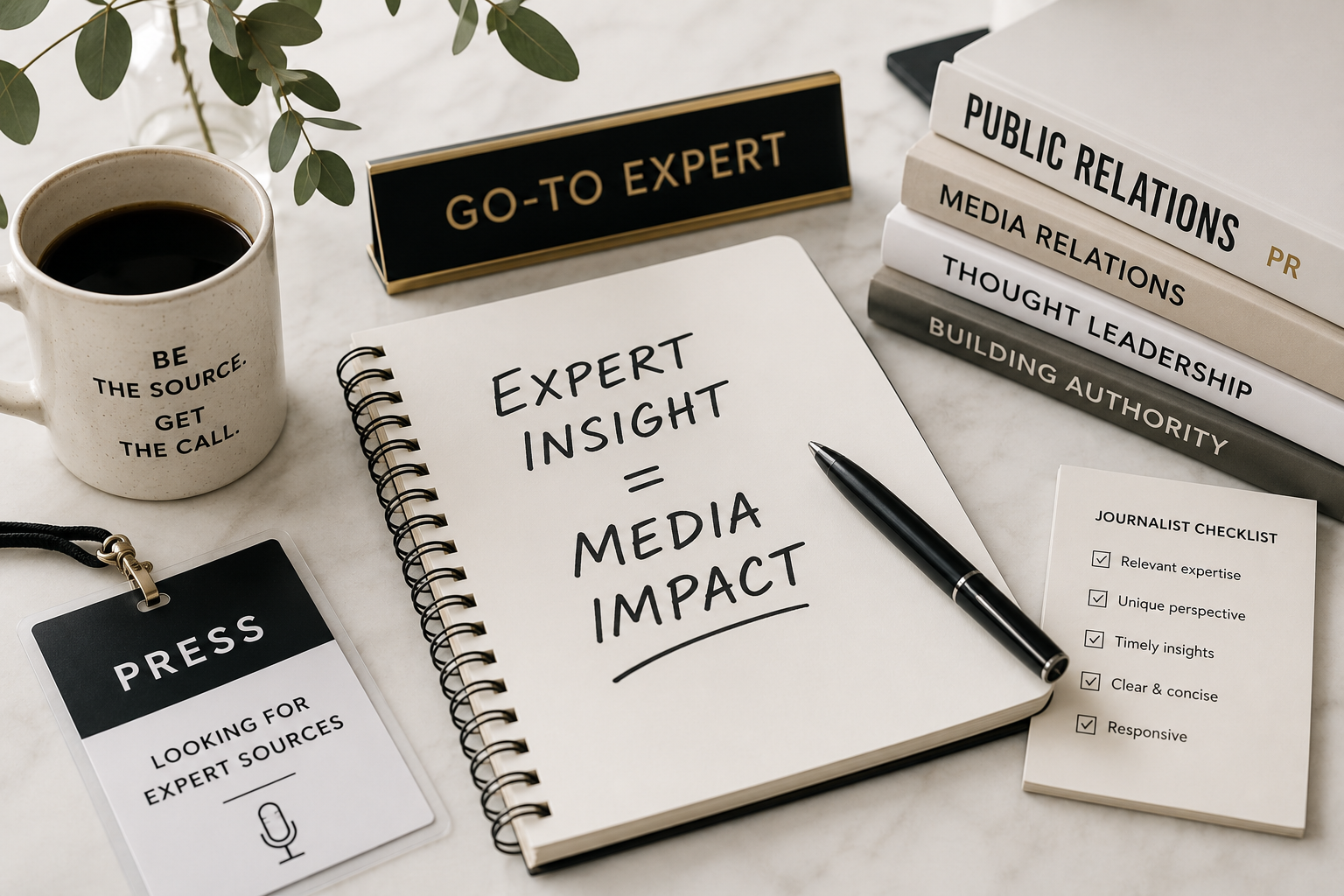
A modern flat-lay workspace featuring a notebook with the words "Expert Insight = Media Impact," PR and thought leadership books, a press badge, and a journalist checklist. The image symbolizes how founders build authority, establish credibility, and become trusted expert sources for media opportunities.
It's Not About Being the Loudest—It's About Being the Most Helpful
When people think about public relations, they often picture product launches, company announcements, or major media placements.
But some of the most valuable PR opportunities never start with a press release.
They start with a journalist looking for an expert.
Every day, reporters are searching for credible sources to explain trends, provide industry insight, and add perspective to their stories. The founders who consistently earn media coverage aren't necessarily the biggest names—they're the ones who have built a reputation as trusted experts.
So how do they become the people journalists call first?
They Build Expertise Before They Need Publicity
One of the biggest misconceptions about media relations is that journalists are looking for companies to feature.
More often, they're looking for experts who can help tell a story.
For example, if a reporter is writing about artificial intelligence, they're not searching for "AI startup."
They're searching for someone who can explain how AI is changing the industry, share a unique perspective, or help readers understand what's happening.
The founders who consistently earn media coverage have already positioned themselves as reliable voices in their field.
They Have a Clear Point of View
Being an expert isn't about knowing everything.
It's about having something meaningful to say.
The founders who stand out have a perspective that is recognizable and consistent.
Instead of commenting on every topic, they become known for a handful of core ideas.
Ask yourself:
What conversations do you want to be part of?
What misconceptions can you challenge?
What trends do you see before others?
What questions do customers ask you repeatedly?
Those answers often become the foundation of your thought leadership.
They Share Insights Consistently
Journalists don't just evaluate your company—they often research you personally.
Before reaching out, they'll likely review your LinkedIn profile, website, recent interviews, social media presence, and published content.
If they find thoughtful insights, educational content, and a consistent point of view, you're much more likely to be viewed as a credible source.
Thought leadership isn't about posting every day.
It's about consistently demonstrating expertise over time.
They Respond Quickly
Media opportunities often move fast.
A journalist may need a quote within a few hours.
The founders who earn repeat coverage understand the importance of responding promptly with clear, concise, and useful insights.
Being accessible is just as important as being knowledgeable.
They Focus on Helping, Not Promoting
One of the fastest ways to lose a media opportunity is turning every interview into a sales pitch.
Journalists aren't looking for advertisements.
They're looking for expertise.
The best sources educate first and promote second.
When founders focus on helping readers understand a topic instead of talking about themselves, they naturally become more valuable to reporters.
Ironically, that's also what makes readers curious about their company.
They Build Authority Over Time
Becoming a go-to source doesn't happen after one interview.
It happens through consistency.
Every article.
Every podcast.
Every conference.
Every LinkedIn post.
Every insightful quote.
Each one reinforces your credibility and makes it easier for journalists to think of you the next time they're covering your industry.
Authority compounds.
Why This Matters More Than Ever
Today's media landscape has changed.
A single quote in a respected publication doesn't just reach that publication's audience.
It can:
Strengthen your brand's credibility
Support your SEO through authoritative mentions and backlinks when available
Increase your visibility in search results
Reinforce your expertise across AI-powered search experiences
Create valuable content you can repurpose across your own marketing
That's why becoming a trusted expert isn't just a PR strategy.
It's part of building long-term authority, improving AI discoverability, and increasing your visibility across search.
Final Thoughts
The founders who earn the most media coverage aren't always the ones with the biggest budgets or the newest products.
They're the ones who consistently show up with valuable insights.
When you focus on becoming a trusted expert instead of simply seeking publicity, media opportunities become a natural extension of your expertise.
The goal isn't just to get quoted once.
It's to become the person journalists think of every time they cover your industry.