
How Journalists Actually Vet Brands Before Covering Them
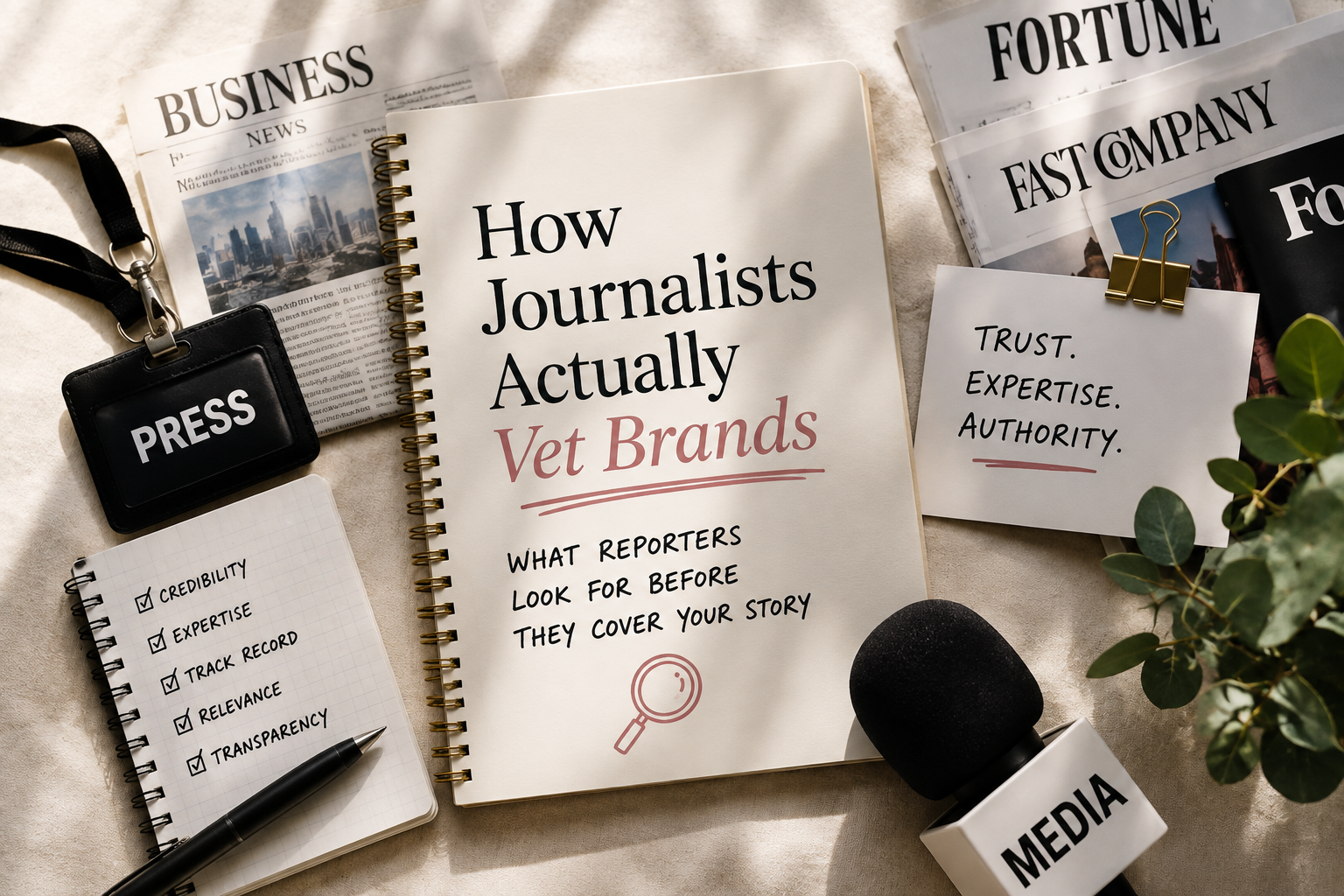
Editorial flat lay featuring a notebook titled "How Journalists Actually Vet Brands," surrounded by press materials, a media badge, notebook checklist, microphone, newspapers, and notes representing the research journalists conduct before covering a company
One of the biggest misconceptions about public relations is that a great pitch is all it takes to earn media coverage.
While a compelling story is certainly important, most journalists don't decide whether to cover a company based on an email alone. Before investing time in an interview or writing a story, many reporters conduct their own research to better understand the company, its leadership, and whether it's a credible source.
Today's journalists have access to an enormous amount of information within minutes. They can visit your website, review previous media coverage, look through LinkedIn, evaluate your expertise, and quickly determine whether your company appears trustworthy and relevant.
If your digital presence doesn't support your pitch, even a great story can lose momentum.
Here's what journalists often evaluate before deciding whether to cover a brand.
1. Your Website Is Usually the First Stop
Your website is often the first impression a journalist has of your company.
Within just a few minutes, they should be able to answer questions like:
What does this company do?
Why does it matter?
Who are the founders?
What makes this business different?
Is this company legitimate?
If your website is confusing, outdated, or lacks clear messaging, it creates friction before the conversation even begins.
2. Does Your Leadership Team Demonstrate Expertise?
Journalists don't just interview companies.
They interview experts.
That means they'll often look at founder bios, executive profiles, LinkedIn pages, previous interviews, speaking engagements, and published articles.
The stronger your leadership presence, the easier it becomes for a reporter to feel confident quoting your team.
3. Previous Media Coverage Builds Confidence
Contrary to popular belief, previous media coverage isn't just valuable because customers see it.
It also signals credibility to future journalists.
If reputable publications have already interviewed your company or quoted your executives, it reinforces that others have considered your brand a reliable source.
This doesn't mean you need coverage from Forbes or The Wall Street Journal before earning media attention.
Regional publications, trade media, podcasts, and niche industry outlets all help build credibility over time.
4. Journalists Look for Consistency
Imagine your pitch says your company is an industry leader.
But your website says something different.
Your LinkedIn hasn't been updated in years.
Your messaging changes from page to page.
Those inconsistencies create doubt.
Strong brands tell the same story everywhere.
5. Thought Leadership Matters
One of the easiest ways to establish expertise is through thought leadership.
Published articles.
Industry commentary.
Educational blog posts.
Podcast interviews.
All of these create a digital footprint that demonstrates your knowledge before a reporter ever speaks with you.
6. Online Reputation Plays a Bigger Role Than Most Brands Realize
Depending on the story, journalists may also look at:
Customer reviews
Awards
Company news
Industry recognition
Social media
Community involvement
They're building a picture of who your company is.
The easier that picture is to understand, the easier it is to trust.
PR Starts Long Before the Pitch
The brands that consistently earn media coverage aren't always the ones with the newest product or biggest marketing budget.
They're often the brands that have invested in building authority before they ever reach out to the media.
When journalists can quickly verify your expertise, understand your business, and find credible information online, your pitch becomes much stronger.
Final Thoughts
Media coverage isn't simply about sending more pitches.
It's about creating a brand that journalists can confidently research, understand, and trust.
Because before a reporter tells your story, they're often asking one question:
Is this a credible source?
The stronger your digital presence, the easier that answer becomes.