
How to Build a PR Strategy That Turns a Niche Brand Into a Recognizable One: How We Helped Happy V
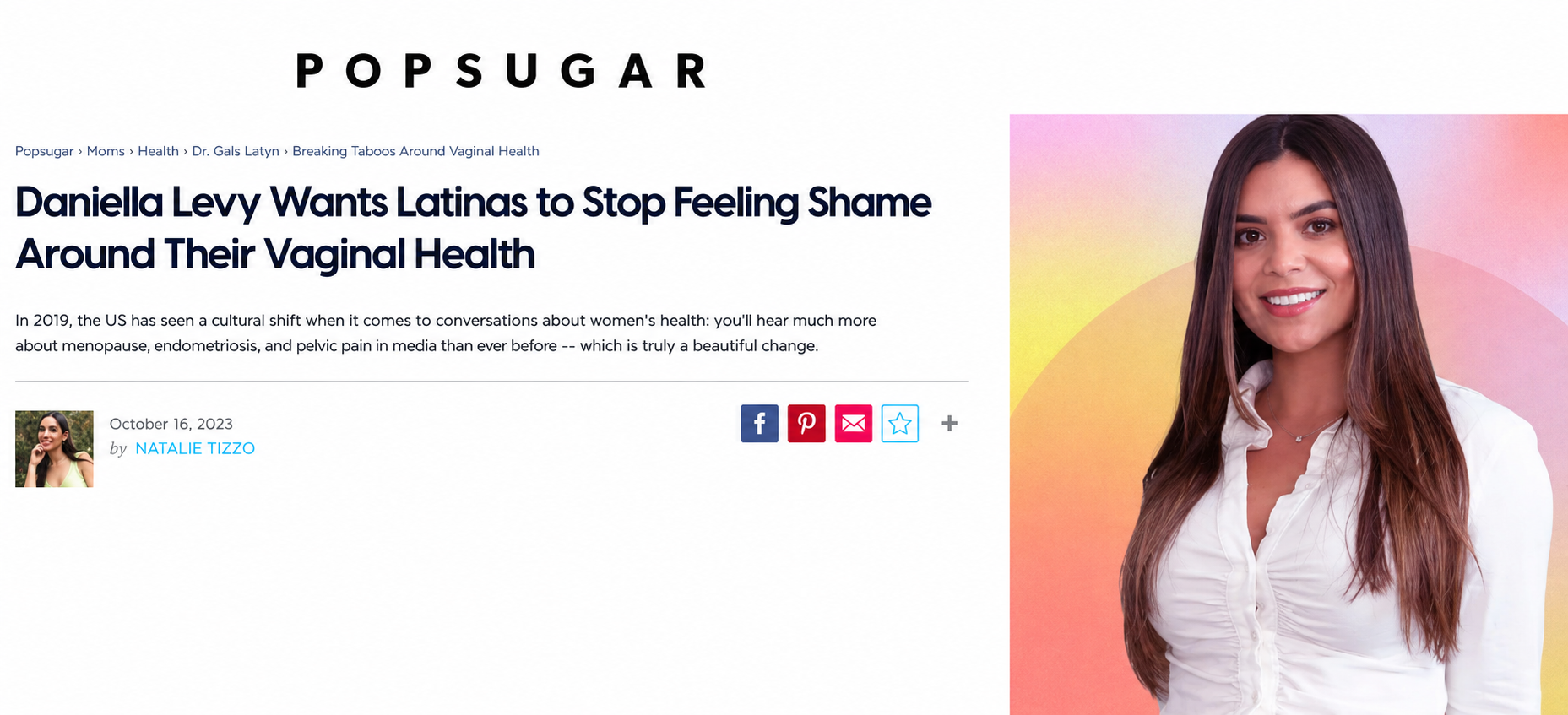
A clean editorial-style screenshot of a POPSUGAR article featuring Daniella Levy, with the headline “Daniella Levy Wants Latinas to Stop Feeling Shame Around Their Vaginal Health.” The image shows Daniella smiling in a white blouse against a colorful pink, peach, orange, and yellow gradient background, alongside the POPSUGAR branding and article details.
When Happy V came to us, it had a strong product and an important mission: make conversations around vaginal health more accessible, educational, and less stigmatized.
The challenge wasn't simply getting the brand mentioned in the media. It was figuring out how to make journalists see Happy V as relevant to the stories they were already writing.
Over time, we built a PR strategy around multiple angles—from founder storytelling and cultural identity to product roundups, women's health education, seasonal stories, and expert commentary.
The result was a sustained media presence across consumer, health, beauty, wellness, business, and lifestyle publications, including PopSugar, Cosmopolitan, Prevention, Good Housekeeping, Yahoo!, Forbes, Fortune, Health.com and others.
Here’s how we approached it.
1. Start With the Story, Not the Product
One of the biggest PR mistakes brands make is leading with what they sell.
A product is rarely the most interesting story.
For Happy V, the more compelling story was the founder behind the brand and the problem she was trying to solve.
Daniella Levy's own experience with recurrent bacterial vaginosis ultimately inspired her to research the issue and create Happy V. That personal experience became a powerful foundation for founder-focused media opportunities.
Instead of pitching:
“Here is a new vaginal wellness supplement.”
We could pitch:
“Meet the founder working to change the way women talk about vaginal health.”
That distinction matters.
It gives journalists a person, a perspective, and a larger cultural conversation—not just a product.
That approach led to founder and brand stories across outlets including PopSugar, HOLA! USA, MITU, Fortune, Business Insider and others.
The takeaway:
If you want media coverage, ask:
What is the story behind the company that is bigger than what the company sells?
That is often where the strongest PR opportunities begin.
2. Build Multiple Media Angles Around the Same Brand
A strong PR strategy doesn't depend on one pitch.
For Happy V, we developed different ways for the brand to become relevant to different types of journalists.
That meant looking at opportunities through several lenses:
Founder and entrepreneur stories
Women's health education
Vaginal wellness
Product roundups
Wellness and beauty
Latina-owned businesses
Cultural identity
Seasonal shopping opportunities
Expert-driven health stories
Business and marketing stories
This created a much larger media universe.
For example, Happy V appeared in founder and brand stories as well as product roundups and expert-driven stories. The coverage ranged from a PopSugar founder profile to product recommendations in publications such as Cosmopolitan, Yahoo!, Prevention and Sports Illustrated.
The takeaway:
Don't ask, “What can we pitch this month?”
Ask:
“How many different reasons could a journalist have to talk about this brand?”
The more legitimate angles you can identify, the more opportunities you create.
3. Make the Founder Part of the PR Strategy
For founder-led companies, the founder shouldn't only appear when a journalist wants a company quote.
They can become a source of expertise, perspective, and storytelling.
With Happy V, Daniella was positioned not only as the founder of a vaginal wellness company, but as a voice in conversations around women's health, entrepreneurship, cultural identity, and wellness.
That created opportunities that weren't necessarily about selling a product.
For example, Daniella appeared in founder-focused stories and interviews, including a PopSugar profile focused on breaking stigmas around vaginal health.
The brand also appeared in stories centered around Latina entrepreneurs and Latina-owned wellness brands, giving Happy V another layer of relevance beyond its category.
The takeaway:
Your founder's story is a PR asset.
Think beyond:
“What does our founder know about our product?”
Instead ask:
“What does our founder have a unique perspective on that journalists are already covering?”
4. Use Product Roundups Strategically
Product roundups can be some of the most valuable PR opportunities for consumer brands because they put the product directly in front of people who are actively researching what to buy.
Happy V was included in product and recommendation stories across publications including Good Housekeeping, Prevention, Yahoo!, Cosmopolitan, Sports Illustrated, Byrdie and others.
But getting a product into a roundup isn't simply about sending a product description.
The pitch needs to explain why this particular product belongs in this particular story.
That means understanding the publication, the audience, the article, and what makes the product meaningfully different.
The takeaway:
Don't pitch your product to a publication.
Pitch your product to a specific editorial need.
5. Find the Intersection Between Your Brand and Culture
One of the strongest opportunities for Happy V came from connecting the brand to its founder's Colombian-American identity.
Happy V was featured in stories highlighting Latina-owned and Latinx wellness brands, including coverage in People en Español, Yahoo!, Good Housekeeping, HOLA! USA and The Thirty.
This wasn't about forcing a cultural angle into every pitch.
It was about recognizing that the founder's background was genuinely part of the company's story—and identifying publications and stories where that perspective was relevant.
The takeaway:
Your company's identity, founder background, location, audience, mission, or community may open media opportunities that a generic product pitch never would.
6. Think About PR as an Ecosystem, Not a Single Placement
One media placement is great.
A sustained media presence is better.
Happy V's coverage accumulated across years and across categories—from founder profiles and brand stories to product roundups, expert stories, podcasts and cultural media. The media tracker ultimately recorded an overall media presence of more than 51 million in the tracked coverage.
The bigger win wasn't one headline.
It was creating a pattern:
Founder story → brand credibility → product discovery → expert validation → broader consumer awareness.
That is what makes PR compound.
A consumer may discover the brand through a product roundup. Another person may encounter the founder's story. A journalist may see previous coverage when researching a future story. A potential customer may Google the brand and find multiple credible third-party sources.
The goal is to build enough independent evidence around a brand that it starts to feel established.
What Happy V's PR Strategy Teaches Us
The lesson isn't that every brand needs to be featured in the same publications as Happy V.
The lesson is that effective PR comes from finding multiple legitimate reasons for the media to care about your company.
For Happy V, that meant combining:
Founder storytelling + product PR + expert-driven media + cultural storytelling + timely opportunities.
Instead of relying on one big launch or one viral story, we built a broader media strategy that allowed the brand to show up repeatedly—and in different contexts.
That's the difference between getting press and building authority through PR.
Want PR that does more than generate a few media mentions?
At Fein PR, we build strategic PR programs designed to increase brand visibility, credibility, and authority—not just chase logos.