
How to Get Your Brand on National TV: A PR Strategy That Works
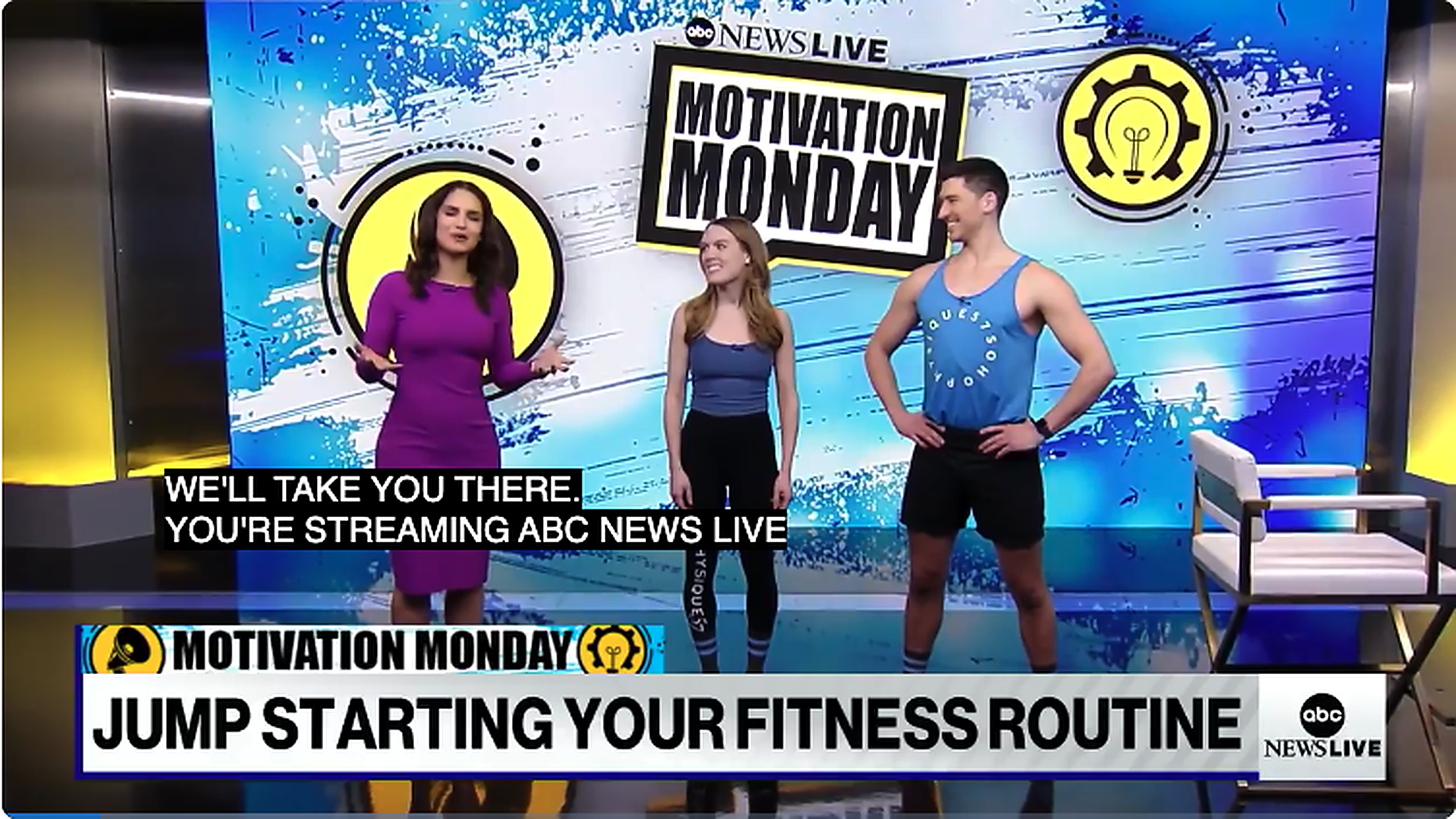
Physique 57 fitness experts appear on ABC News Live during a “Motivation Monday” segment about jump-starting a fitness routine, showcasing the brand’s national television media coverage.
See how Fein PR helped Physique 57 secure a national broadcast segment and what brands can learn about turning their expertise into television coverage.
How do you get your brand on national TV?
The answer isn't simply pitching your company to television producers. Successful broadcast PR starts with finding a timely story, positioning your brand or expert as a credible source, and giving producers a reason to believe the segment will be valuable to their audience.
That's the approach we took with Physique 57, where Fein PR secured a national broadcast segment by turning the brand's fitness expertise into a compelling media opportunity.
Getting a brand featured on national television can create significant visibility, but the opportunity has to make sense for the audience and the format. Television producers aren't simply looking for companies that want exposure. They're looking for stories that are timely, relevant, easy to understand, and compelling enough to work as a segment.
Here's what the Physique 57 PR win can teach other brands about securing national television coverage.
Start With the Story, Not the Brand
One of the biggest mistakes brands can make when pursuing television coverage is leading with the company itself.
A producer doesn't necessarily want to hear that your company is innovative, leading, or the best at what it does. They want to know why their audience should care about the story.
For Physique 57, the opportunity wasn't simply about promoting a fitness brand. We looked at how the brand's existing expertise could contribute to a broader conversation that would be relevant to viewers.
That's an important distinction in broadcast PR. Instead of asking a producer to feature your company, you're giving them a story their audience might actually want to watch.
The takeaway: Don't pitch the brand. Pitch the reason the brand belongs in the conversation.
Find the Right Broadcast Angle
Television opportunities are often driven by timely conversations, consumer questions, trends, and stories that can be communicated quickly.
That means the same expertise that might work for a magazine article or online publication doesn't necessarily translate directly into television. A successful TV pitch needs to make the story easy for a producer to understand and visualize.
For Physique 57, we focused on the brand's fitness expertise and looked for a way to connect that expertise to a larger story rather than simply asking for a product or company feature.
That shift—from "cover our brand" to "here's a story your audience will care about"—is an important part of an effective PR strategy.
Position Your Client as the Expert
One of the most valuable things PR can do is turn a company's existing expertise into a media asset.
Physique 57 already had knowledge and experience in the fitness space. Our job was to identify where that expertise could be useful to the media and position the brand accordingly.
This is especially important for television. A broadcast guest needs to be able to explain a topic clearly, offer useful insight, and give viewers something they can take away from the segment.
The goal isn't simply to get a company logo on television. It's to give the audience a reason to remember the expert or brand behind the story.
This is where thought leadership and media relations can work together. When a company has a clear area of expertise and a perspective that can contribute to a larger conversation, that expertise can become the foundation for meaningful media opportunities.
Broadcast PR Requires a Different Kind of Pitch
A television producer is thinking about a segment—not a 1,000-word article.
That means a broadcast pitch needs to quickly communicate what the story is, why it matters now, why the proposed expert or brand is qualified to speak about it, what they can offer viewers, and what the segment could actually look like.
National television is competitive, which is why the opportunity needs to make sense from the producer's perspective as well as the client's.
The strongest broadcast pitches don't feel like advertisements. They give producers a clear story, a credible source, and a reason to believe the segment will be useful or interesting to their audience.
Think Beyond the Placement
Getting your brand on national television is a major PR win, but the segment shouldn't be where the strategy ends.
A broadcast appearance can become part of your broader media coverage and authority strategy. The segment can be added to your website, shared on LinkedIn and other social channels, incorporated into a media kit, included in an executive or founder bio, and referenced in future media pitches.
It can also give journalists another reason to view your brand or spokesperson as a credible source.
This is why I don't think PR should be measured only by whether you landed one placement. The bigger question is what that placement allows you to do next.
One strong piece of media coverage can create credibility. Consistent coverage over time can help build authority.
Build Media Momentum, Not Just One TV Appearance
The goal of PR shouldn't be to get one exciting placement and immediately move on to the next thing.
A national broadcast appearance can become another piece of evidence that a brand has something valuable to say.
For Physique 57, the broadcast opportunity gave the brand another way to establish its expertise and put that expertise in front of a much larger audience.
That's ultimately what strategic PR should do: create recognition around what a brand actually knows.
When media coverage, expert commentary, thought leadership, and other opportunities build on one another, a brand can create media momentum rather than relying on a single press hit.
What the Physique 57 Broadcast Win Teaches Us
National television isn't about simply asking a producer to feature your company. It's about finding the intersection between what your brand knows, what people care about, and what the media needs right now.
For Physique 57, that meant taking the brand's fitness expertise and turning it into a story that could work for a national broadcast audience.
The result was a national television segment that gave the brand another meaningful piece of third-party visibility and another opportunity to build recognition around its expertise.
And that's what makes PR valuable over the long term.
You aren't just trying to get your brand mentioned. You're building authority around what your brand knows, why it matters, and why people should pay attention.
Frequently Asked Questions About Getting Your Brand on National TV
How do you get a brand featured on national TV?
Getting national television coverage typically starts with identifying a timely story that is relevant to the audience, then positioning a credible brand representative or expert who can provide useful insight. A strong pitch should clearly explain why the story matters and why the proposed guest is the right person to contribute.
What makes a brand interesting to TV producers?
TV producers need clear, timely stories that can be communicated quickly and effectively to their audience. A strong expert, compelling consumer angle, emerging trend, timely news hook, or useful perspective can make a brand more relevant to a broadcast segment.
Can a PR agency help get a brand on national television?
Yes. A PR agency can identify relevant broadcast opportunities, develop media angles, pitch producers and reporters, and position a company's founder, executive, expert, or brand as a potential source for television coverage.
Is national TV coverage valuable for a brand?
National television can provide significant visibility and third-party credibility. When a segment is also published online, shared through the brand's owned channels, or referenced in future media outreach, the coverage can continue creating value beyond the original broadcast.
How can brands get more value from a TV appearance?
Brands should think beyond the initial broadcast. The appearance can be incorporated into the company's website, social media, media kit, executive bio, sales materials, and future PR outreach. It can also become part of a broader strategy for building media momentum and long-term brand authority.
The Bottom Line
Getting on national TV isn't about sending more pitches. It's about finding the right story, connecting it to something people care about, and positioning your brand or expert as someone who can add value to the conversation.
That's what we did with Physique 57—and it's the same principle that applies to broadcast PR more broadly.
The best media opportunities don't just put your brand in front of an audience. They give people a reason to remember you.
At Fein PR, we help brands turn their expertise, stories, and unique perspectives into meaningful media opportunities, thought leadership, and long-term PR momentum.