
If you’re trying to figure out how to get press for your brand in 2026, the landscape has changed.
Traditional press releases don’t work the way they used to. Mass-blasting journalists doesn’t work. And “we launched a product” is not enough to get coverage.
What does work is strategic storytelling, strong media angles, and understanding what journalists actually need right now.
This guide breaks down exactly how brands are getting featured in outlets like Forbes, Fast Company, Allure, and beyond — and how you can do it too.
What “Getting Press” Actually Means Today
Getting press isn’t just “being featured in an article.”
It means:
Being quoted as an expert in a story
Having your brand featured as part of a trend
Being included in a roundup or product list
Or becoming a go-to source journalists repeatedly cite
Modern PR is less about announcements and more about becoming part of the conversation already happening in media.
Step 1: Stop Pitching Your Brand — Start Pitching an Angle
The biggest mistake brands make is leading with themselves.
Journalists don’t care about your brand first. They care about:
trends
cultural shifts
data
expert insight
timely commentary
Example:
❌ Weak pitch:
“We just launched a new skincare line.”
✅ Strong pitch:
“Why ‘preventative aesthetics’ is replacing traditional skincare routines in 2026”
Your brand becomes the proof point, not the headline.
Step 2: Understand What Journalists Actually Want
Journalists are not looking for promotions. They are looking for:
fast expert commentary
strong opinions on trends
data or insights they can quote
credible sources for recurring stories
This is why experts are repeatedly featured in outlets like:
Fast Company and Forbes
They are not pitching products — they are providing value to stories already being written.
Step 3: Build “Media-Worthy” Angles (Not Brand News)
To get consistent press, you need repeatable story angles.
Here are the ones working in 2026:
1. Trend Commentary
“The rise of non-invasive beauty treatments”
“Why consumers are rejecting over-surgery aesthetics”
2. Seasonal Hooks
summer body trends
holiday beauty trends
wedding season skincare
3. Industry Shifts
AI in beauty and wellness
creator-led branding
medical + aesthetic crossover
Step 4: Target the Right Publications
Not all press is equal.
You should be strategic about where you aim:
Beauty & lifestyle:
Business & founder stories:
Getting the right placement matters more than getting “any press.”
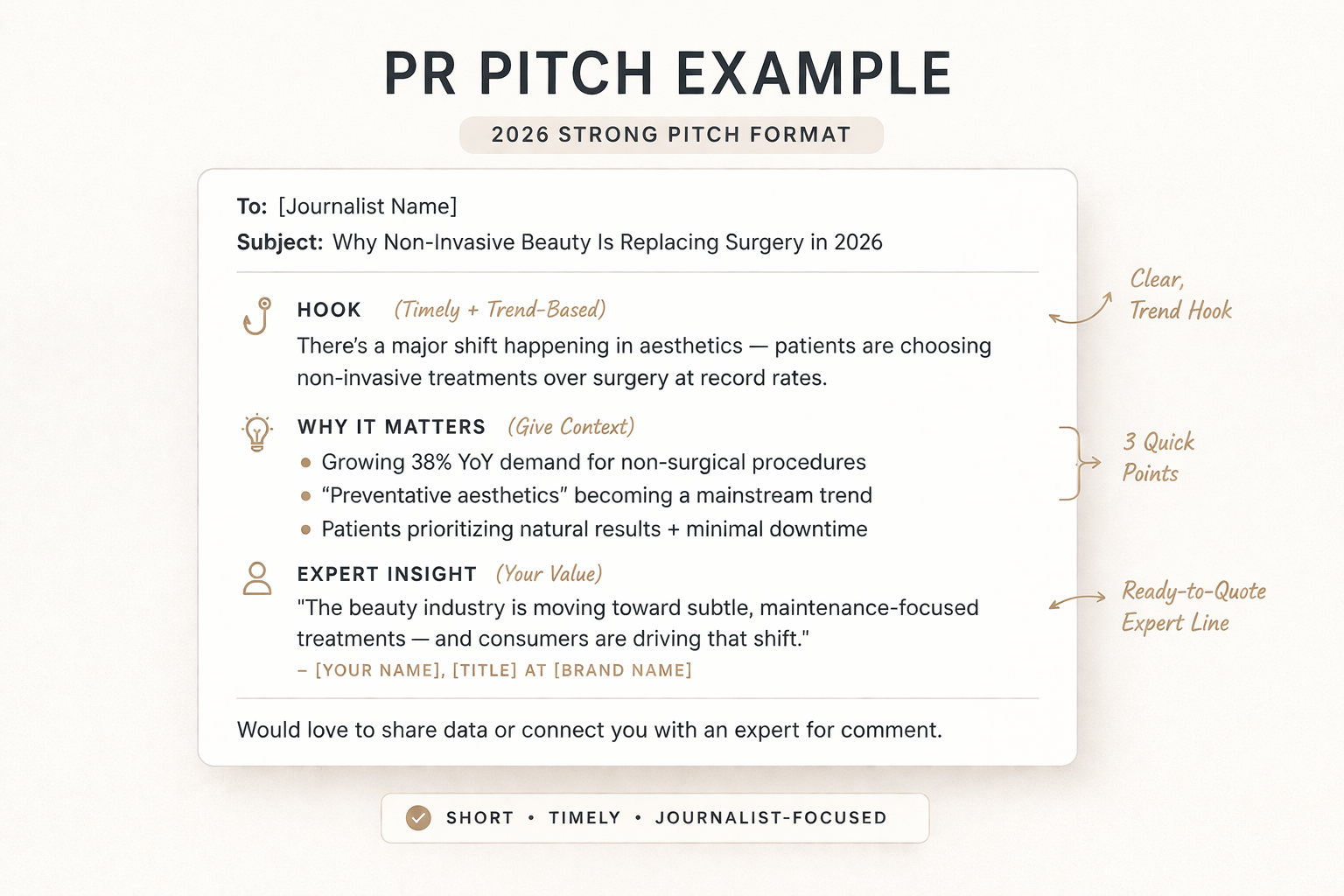
Step 5: Write Pitches That Actually Get Opened
A strong pitch includes:
A clear subject line (no fluff)
A relevant hook tied to a trend
Why it matters now
One clear expert or brand angle
Something usable the journalist can quote immediately
Example structure:
Subject: Why non-invasive beauty is replacing surgery in 2026
Hi [Name],
I wanted to share a trend we’re seeing in aesthetics: a sharp rise in demand for non-invasive treatments as patients move away from traditional surgical procedures.
Happy to share expert commentary on:
why this shift is happening
what patients are prioritizing now
how clinics are adapting
Let me know if helpful.
Step 6: Become a Source, Not Just a Story
One of the most powerful long-term PR strategies is becoming a recurring expert source.
Journalists often use platforms like HARO or direct sourcing for:
expert quotes
trend commentary
quick turnaround stories
If you respond consistently with strong insights, you become part of their rotation of trusted experts.
Step 7: Timing Is Everything
PR is highly timing-driven.
The same story pitched at the wrong time will fail.
Examples:
Summer → body, aesthetics, wellness
January → “new year transformation” content
Award seasons → celebrity + luxury brand seeding
Fall → skincare recovery + routine resets
If your pitch isn’t tied to timing, it gets ignored.
Step 8: Show Proof, Not Promises
Editors trust:
results
case studies
real data
named experts
Not vague claims.
Even if you don’t have huge brand names yet, you can still show:
engagement results
campaign outcomes
expert credentials
unique insights
Step 9: What to Do If You’re Not Getting Responses
If your pitches are going unanswered, it usually comes down to:
weak or generic angles
wrong journalist targeting
no timely hook
too much focus on the brand itself
no clear “why now”
Fixing those five things alone dramatically increases response rates.
Final Takeaway
Getting press in 2026 is not about sending more emails.
It’s about:
positioning your brand inside existing conversations
offering journalists something usable immediately
and consistently showing up with relevant expertise
Brands that win at PR don’t “pitch harder.”
They become impossible to ignore in their category.